
Every Story Needs a Beginning
by Brian Wilson - Editor of The Star News
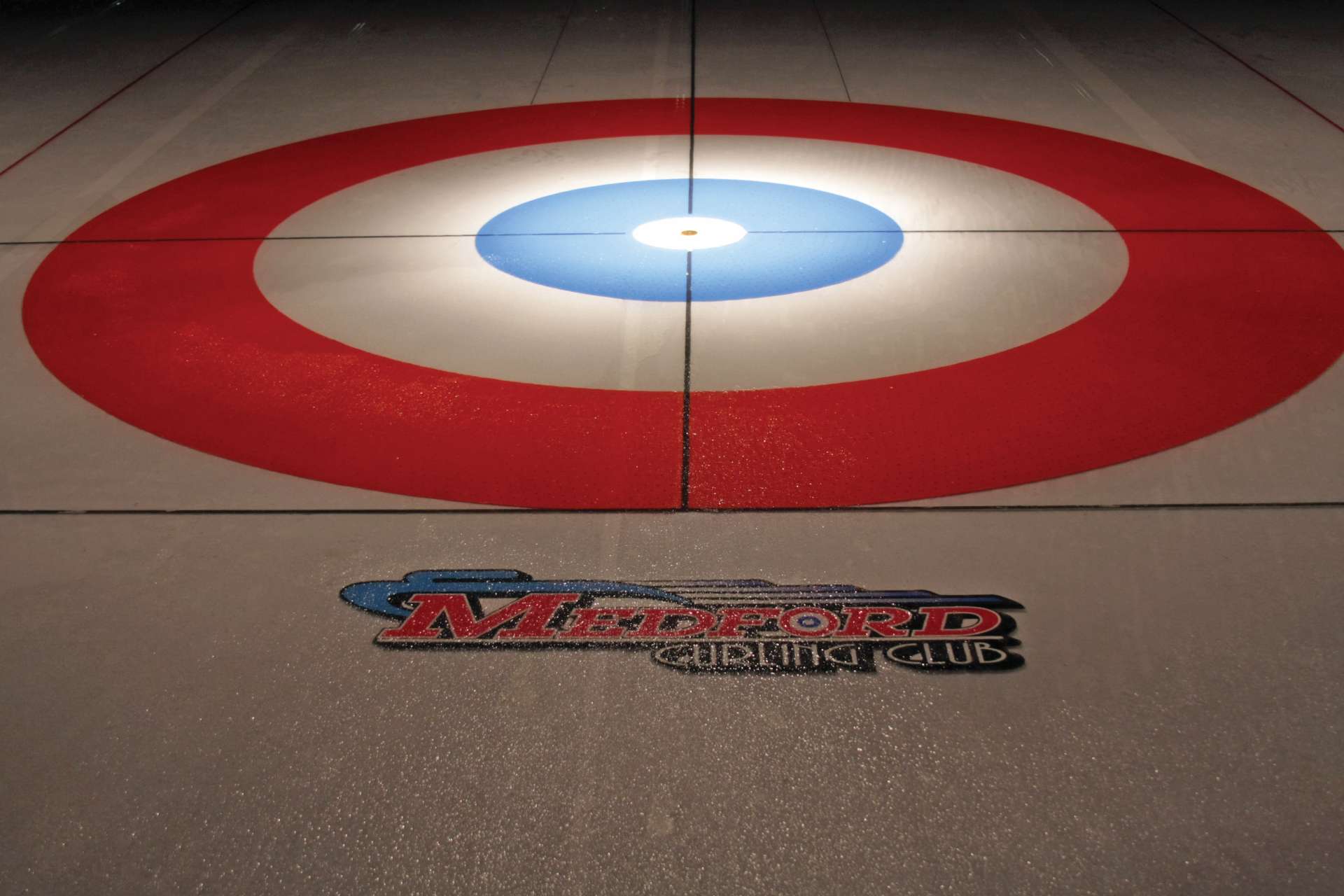
The challenge for historians is pinpointing the event that marks the beginning. The story of the Medford Curling Club and of curling in the Medford area is no different than any other story. There are lively debates about when curling first came to what was then a backwaters central Wisconsin logging town. Indeed, there were probably variations of the winter game played on frozen area lakes for years before any organized club was formed.
But a story has to start somewhere and that place for the Medford Curling Club is during the summer of 1914. On July 7, 1914, a group of 40 men signed their names as the first members of the newly registered club. The articles of incorporation were filed in the register of deeds office at the courthouse.
The charter members each committed to pay a fee of $10 to cover the cost of the season. At a time when the average pay of a carpenter was $28 a week and a farm worker might get that amount for a month’s work, the amount each man contributed was substantial. When adjusted for inflation, it would equal about $487 in today’s currency
According to a curling club history compiled by longtime curler and retired Medford attorney Ray Scot, curling first began on the Black River Millpond n 1913. Three men, O.G. Blakeslee, F.G. Pierce, and B.C. Alm are credited with bringing the sport to Medford. It would be many years before the club was opened for women curlers.
The club’s first stones were loaned from a curler in Phillips. By 1917, there were seven rinks in the regular season and games held between the Medford and the Phillips Clubs.
Shortly after registering the new organization, the founding members worked to secure a curling location. An arrangement was reached with the Wesle Brothers who operated a blacksmith shop and livery stable in downtown Medford. The shop was located near the intersection of what is now Wisconsin Ave. and State Street where the City View building is currently. Older area residents will remember the location as the first hospital in the city and later where the county’s human services offices were located.
Curling thrived for the first four years of incorporation. However, the effects of WWI and the 1918 flu epidemic led to the sport going into a dormant period which lasted for about 20 years. There were a few curlers who kept the game alive in Medford and who were members of the Wausau curling club.
By the early 1930s O.G. Blakeslee and Frank Pierce were dues paying members at the Wausau club and eventually there were two fill teams of Medford curlers who traveled the approximately 100 mile round trip for regular league games. As the club history notes, the Medford curlers were noted to have never cancelled a game and were never later regardless of the weather.
In August 1937, Pierce’s company, Universal Engineering, purchased the Fleming Garage Building at 224 South Second Street — now the location of the a city parking lot. During the winter of 1937-38 the garage repair shop was converted to a two-sheet curling rink house with ice ready just before Christmas 1937. The Dec. 30, 1937 issue of The Star News included a general call for all people interested in curling to come to meet on Jan. 3, 1938.
Turnout was high at the meeting and the club was organized with Ray Blakeslee as president, Bert Alm as vice president, Eugene Bizer as treasurer, and Pierce as secretary. The new club didn’t forget its roots with the older organization. The surviving founding charter members from 1914 were honored at the 1956 Men’s Invitational Bonspiel.
Following the Jan. 3, 1938 meeting, a schedule was put together with league curling starting Jan, 12 of that year. The first Central Wisconsin Bonspiel was held in February of that year.
Curling continued at the Universal Engineering building through the winter of 1944-1945. As the club history notes, in spite of many young men being absent from the community for service in WWII, the club gained in membership and enthusiasm to the point where there was talk of building a new rink house
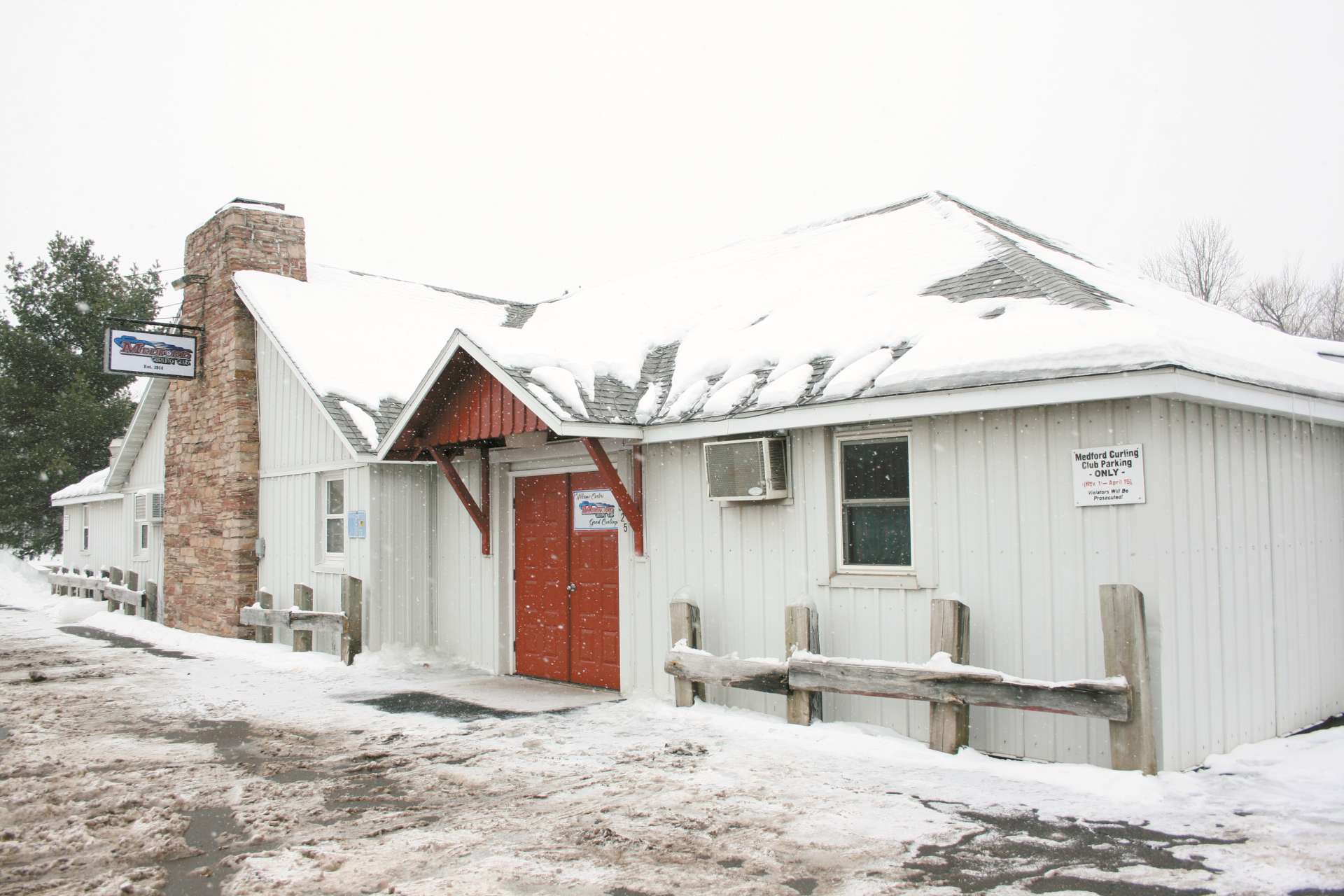
Talk of building a new curling facility began as early as 1941. In June of that year, a city referendum was held for the construction of a new community center building. The lower level of the facility would have housed the curling rink with the club contributing $2,500. Despite a federal government grant of $47,000 for the project, it was defeated and club members went back to the drawing board.
Lewis Charles wrote the “official” story of how the new building in came to be that was published in The Star News in December 1945 as a way to promote the grand opening during the annual Medford bonspiel.
According to Charles, the decision to build was made in the spring of 1945 with Oscar Schield named chairman of the building committee and Walter Newberg chairman of the finance committee.
With World War II just ending, they knew building supplies would be in short supply, but as he stated luck was with the club. They applied to the Civilian Conservation Corps office in Washington, D.C. and with the help of the area federal forest officers they were successful in getting a gift of a CCC building in Perkinstown.
Then, as now, Medford Curling Club members were hands on in support of their club. In May 1945, curling club members turned out to tear down the building. “Much valuable timber was thus secured and more was gotten by taking down the old two-sheet rink house,” Charles wrote. The two-sheet rink had served the club for the previous eight years.
Ground was broken for the club at the end of July 1945 on land donated by Hurd Millwork across the street from its plant. The roof went on in October and by the third week in November, the concrete block building was a complete enclosure. Work then turned to the interior making improvements to the warming room and leveling the ground in the rink area.
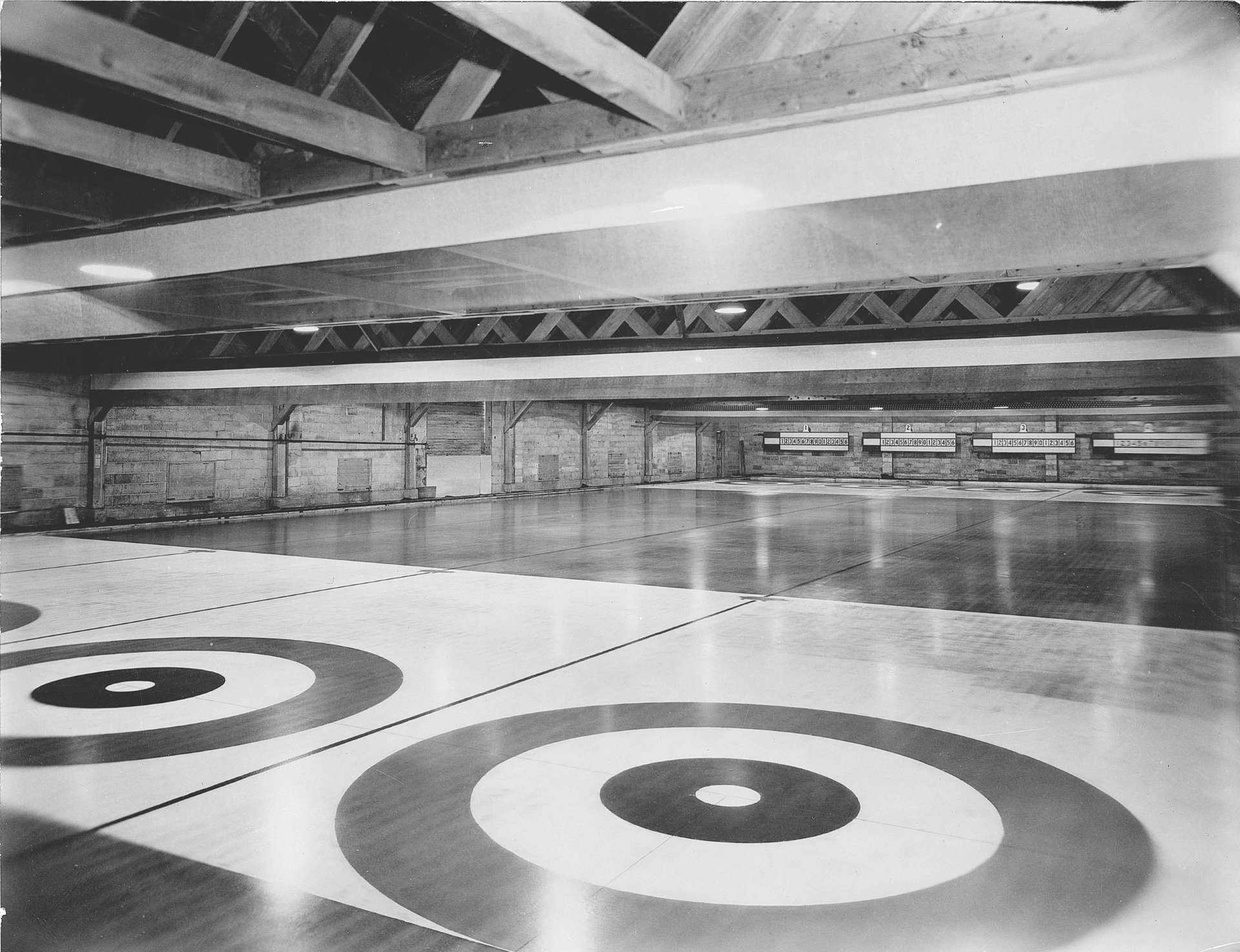
When it was built, the club had two main areas. The rink house measured 150 feet by 64 feet. One of the features of the building was that there are no posts separating the sheets and instead the roof is sustained by trusses. During the 2014 Alumni Bonspiel, that almost changed as the snow load on the roof grew too much and a temporary support had to be installed to allow the snow to be removed — again work done by dozens of club members and volunteers.
When the club was built, there was no refrigeration system to make ice. Doors were located between the roof supports along both sides of the building close to the floor level. When ice was being made, the doors would be opened and the rink flooded. The occasional early season snowstorm meant part of ice maintenance involved shoveling snow that had come in through the cooling doors.
The second part of the curling club was the warming room, which measured 86 feet by 30 feet. About 40 feet of plate glass windows separated the warming room from the rink house and it had seating for around 100 people.
The prominent feature in the warming room was a large fireplace, which Charles notes was big enough to take seven-foot long logs. Charles credited club president G.F. Strebig for his work “scouring the countryside to locate new building materials” and being the spark that kept the project going. Charles boasted that the club “now has a building worth in excess of $15,000.” In today’s dollars it would be the equivalent to about $508,000.
The club members were working fast to get the club ready in time for the 9th annual Central Wisconsin State Bonspiel in January 1946. The bonspiel — what curlers call tournaments — included 42 teams with 32 of them traveling from out of town. In some cases teams traveled hundreds of miles to compete in Medford. Curling in the bonspiel started the Thursday at 5 p.m., going until 2 a.m. Friday morning, restarting at 8 a.m. Friday and continuing to 4 a.m. Saturday morning, restarting at 9 a.m. Saturday and going until 2 a.m. Sunday morning before starting at 8 a.m Sunday and finishing at 9:30 p.m.
A program from the 1946 Central Wisconsin Bonspiel praised those who worked on the club’s construction.
“A new era in Medford curling had begun. In future year, when the club-house echoes with the cries of ‘Sweep, sweep,’ and the ‘clunk’ of stone on stone, let it not be forgotten that we have a debt to these men that can never wholly be repaid.”
The original building did not contain a barroom facility. This is because Pierce was well known in his day as being opposed to consumption of alcohol and his influence in the club carried over so that the space which eventually became a bar was initially a small office and locker room.
The next major innovation at the curling club was the installation of the first refrigeration system. By the mid 1950s, many of the other clubs in Wisconsin had installed refrigeration systems and the Medford curlers who attended out of town bonspiels became convinced of the need for artificial ice. As the close of the 1955-56 season plans were made for the installation of an ammonia-brine refrigeration system at the club, It was purchased from the Vilter Manufacturing Company of Milwaukee.
It utilized steel pipes embedded in sand in the dirt floor of the rink area. According to a Dec. 3, 1956 issue of The Star News, the project cost $16,000 and the club was working on a membership drive resulting in 90 men curlers. There were 35 women curlers signed up for the Lochette League that year.
The sand base only lasted for a few years before club members got tired of the sand finding its way to the ice surface. The decision was made to scoop out the sand and then bury the pipes in concrete. Club members again pitched in to the do the tedious work of shoveling out the sand from around the pipes using small scoop shovels designed by Eugene Bizer and made by Al Zastrow. The concrete floor was installed and the refrigeration system served the club through 1980. By the end of the 1980 season, the system was found to have a number of leaks and it was time for an upgrade. A portable plastic mat system was purchased and laid down over the concrete floor at the start of the season and rolled up at the end of the season, allowing use of the ice area as warehouse space in the off season.
That mat system served the club until 2004. In the final few years of the mat system, it had grown too fragile to roll up at the end of the season and there was a lengthy debate within the club membership about if the club should invest in a new floor at the existing building or build a new facility. One proposal called for the construction of a new rink at the fairgrounds. However, it was eventually decided to stay at the historical curling club and invest in the floor project. Again, volunteers from the club came forward putting in hundreds of hours of volunteer labor to remove the old concrete and break out the steel pipes. Dennis Mertens was chairman of the $60,000 project and Sam Way and Ken Nernberger were among the most dedicated workers putting in hundreds of hours each. Bill Weiland handled the project finances. A new base was installed with insulation and hundreds of feet of PVC piping was laid down and attached to a rebar grid system. It was estimated that the time of construction that without club labor and support from local firms such as Peterson Concrete and Huotari Construction, the project would have cost more than 150,000(265,000 in 2026 dollars).
Over the years, members also worked to improve other parts of the club. In 1956, the former locker room and office was converted into a barroom. The club makes the claim as being the first in the state to hold a regular tavern license. In 1968, the barroom was expanded and was expanded again in recent years for additional storage and the removal of the wall between the bar and warming room to accommodate more fans.
Club members continue to make improvements at the facility to attract not only local curlers but to keep the club a viable venue for national and international events.
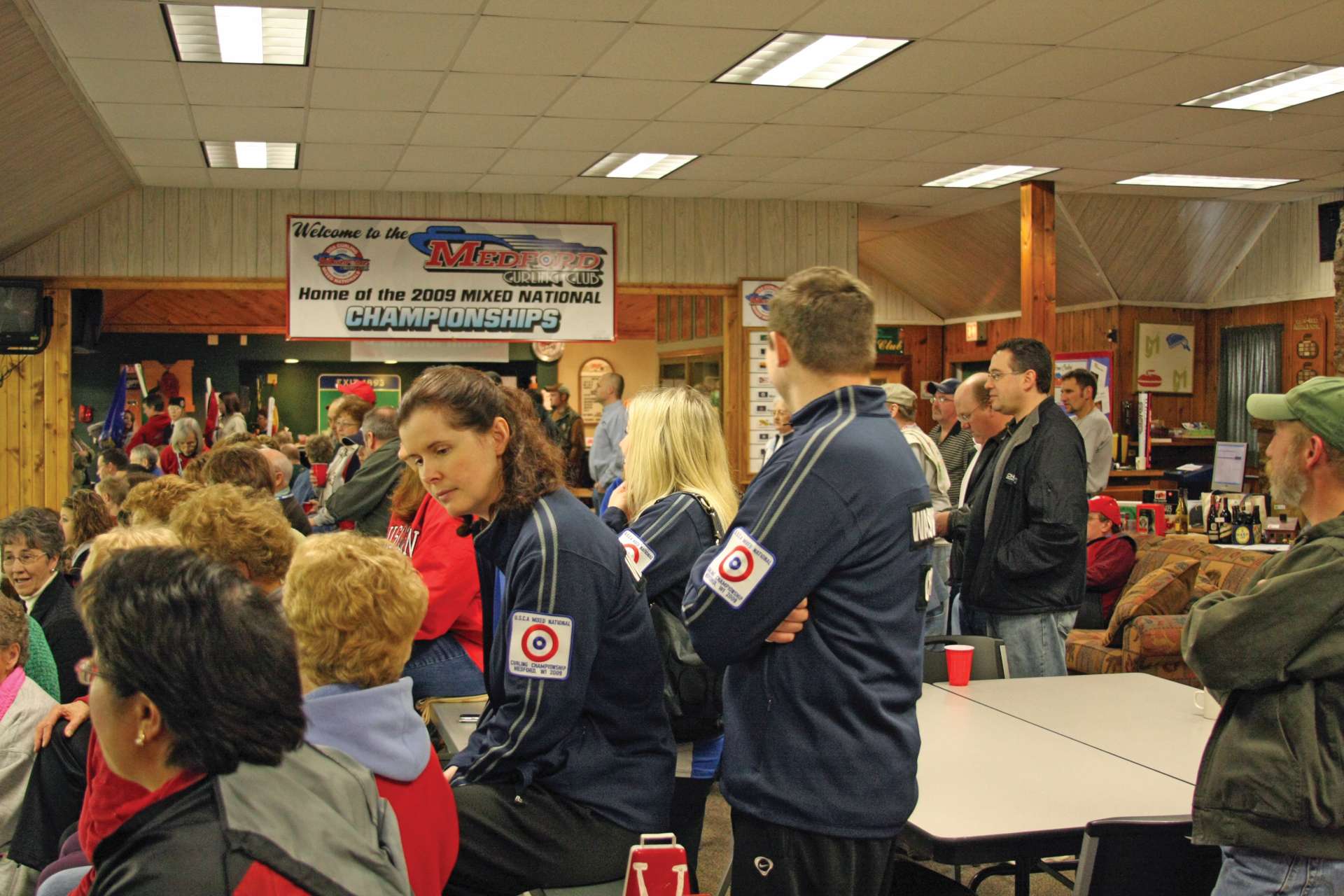
The club has been a stop for both the women’s and men’s Scots Tour with curlers from Scotland playing there on a tour of top U.S. clubs. In 2006, the club hosted the Mixed National Bonspiel an event that drew national attention to the club. In 2014, the club again hosted national competition with the Mixed Doubles National Championship. In 2024, the club was a stop on the Can-Am Tour. In 2026, the club was a competition site along with the Stevens Point Curling Club for the Senior Nationals which was hosted by the Wausau Curling Club. Each event increased the reputation of the Medford curling club and the Medford community.
After 110 years of curling in community, the Medford curling club is still going strong. The club currently offers several league play options including a doubles league held on Mondays, the Lochette’s Women’s
League on Tuesdays, a Wednesday morning league, an open league on Wednesday evening and the Thursday Night Men’s League. The club also hosts open curling for people in the community on Friday nights with the $5 Fridays.
While curling was originally a men’s only sport, it wasn’t long before women became involved. Marie Doyle and Marcy (Strebig) Amacher are credited with being the prime movers in promoting women’s curling in Medford. Doyle would spend many hours at the club and during one men’s game that was short a player, she was invited to play. It was not until the 1950-51 season that women curlers became organized forming the Lochettes. Myrtle Olseon was named as the first Lochettes president.
The club has also hosted a number of bonspiels over the years drawing curlers from all over the state and beyond. In recent years, the club has hosted the Lions State Bonspiel a number of times. Over the years, curlers traveling to the Medford area have routinely praised both the ice conditions a the club and the hospitality of its members and the entire community.
The one exception to that well-deserved reputation for hospitality occurred in March 1960, and no overview of the history of the club can be complete without mentioning it.
Then Sen. John Kennedy made a campaign visit to Medford came as the city was hosting the state women’s bonspiel. He has spoken at a campaign event at the Taylor County Normal School (the local teaching college). Seeing the large number of people at the Medford Curling Club, the entourage stopped to check it out.
Kennedy stopped at the club with his press entourage and the suggestion was made for him to go out on the ice and throw and his luck delivering the rock. His efforts were thwarted when the women pointed out state rules barring everyone except the competitors from being on the ice sheet during competition. The incident was reported in the state newspapers of the day.
Looking ahead to the next century of curling in Medford, the club continues to move forward with upgrades to the television monitors and camera and the installation of a de-ionizer to eliminate impurities from the water used to make ice.
The story of the Medford Curling Club is one that is being written each time a rock is thrown or a skip tells a sweeper to “hurry hard.” It is a story of camaraderie and sportsmanship where all games begin with a handshake and end with the winner team buying the first round after the game ends.






Contact Us
PO Box 56
525 S Whelen Ave
Medford, WI 54451
☎ (715) 748-4050
✉ medfordcurlingclub@gmail.com
Follow Us

